

How is Strep Throat Treated in Children in Glendale, AZ?
Dr. Maria Nabong, MD, and our team at KidsHealth Pediatrics in Glendale, AZ, provide swift, effective treatment for strep throat in children. Treatment typically involves antibiotics to eliminate the bacteria, along with rest and hydration. We offer personalized care to ensure your child recovers quickly and comfortably, minimizing the risk of complications. For more information, contact us today or book an appointment online. Our clinic is located at 5750 W Thunderbird Road, F620, Glendale, AZ 85306.
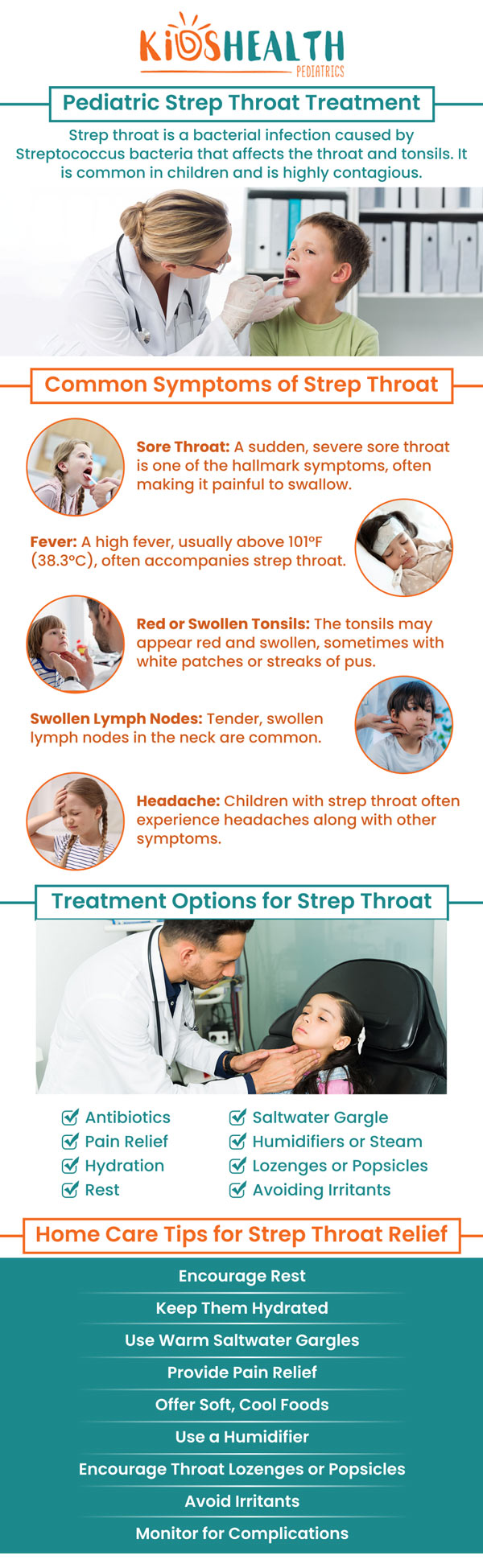
Table of Contents:
What are the symptoms of strep throat in children?
How is strep throat diagnosed in kids?
What is the best treatment for strep throat in children?
How long does it take for strep throat to go away in children?
Dr. Maria Nabong’s Expertise in Treating Strep Throat at KidsHealth Pediatrics
Strep throat is a bacterial infection of the throat and tonsils that is common in school‑aged children. While many sore throats are caused by viruses, strep throat has a set of symptoms that often help distinguish it from other causes. At Kids Health Pediatrics, we watch for patterns of symptoms that suggest strep rather than a routine cold.
1. Sudden Onset of a Sore Throat
Children with strep throat usually complain of a sudden, painful sore throat that starts abruptly and can make swallowing uncomfortable. Unlike viral sore throats, which may worsen gradually, strep pain often begins quickly and intensely.
2. Fever
A higher‑than‑normal temperature is commonly associated with strep throat. Children may feel warm, fatigued, and uncomfortable before other symptoms appear.
3. Swollen Tonsils and Redness
On examination, a child’s tonsils may appear red and swollen. In some cases, small spots or patches of discoloration can be seen on the tonsils or at the back of the throat, which can help distinguish strep from a simple viral illness.
4. Swollen, Tender Neck Glands
Children with strep often develop swollen lymph nodes in the neck, which can feel tender when touched.
5. Headache, Abdominal Pain, or Nausea
Some children also experience headaches, belly pain, or nausea, which may accompany the sore throat and fever.
6. Lack of Typical Cold Symptoms
Unlike viral infections, strep throat typically does not cause a runny nose, cough, or sneezing. When these symptoms are absent, and the sore throat is severe with fever, we consider strep more likely.
7. Difficulty Eating or Drinking
Because the throat is so sore, children may refuse food or drink, which can increase the risk of dehydration. This is one of the reasons we encourage prompt evaluation when symptoms like these start.
When parents contact us with these symptoms, our team at Kids Health Pediatrics evaluates the whole picture — not just one sign or symptom — to determine whether testing for strep throat is appropriate.
Diagnosing strep throat involves a combination of clinical evaluation and specific testing by our providers at Kids Health Pediatrics. Because many childhood illnesses start with sore throats, accurate diagnosis is essential for deciding the right care.
1. Symptom History and Physical Exam
First, we ask about the child’s symptoms and recent contacts with others who might be sick. During the physical exam, we look inside the throat for redness, swelling, and tonsillar changes, check the neck for tender lymph nodes, and evaluate overall signs like fever and behavior.
2. Throat Swab Testing
If symptoms are consistent with strep throat — such as fever with sore throat and no cough — we typically perform a throat swab test. A small swab gently collects secretions from the back of the throat and tonsils.
The swab sample allows us to determine whether the streptococcal bacteria that cause strep throat are present. Because viral infections and strep throat can begin with similar symptoms, this testing helps confirm the diagnosis so we can recommend the best course of care for your child.
3. Follow‑Up Based on Results
If the test indicates strep throat, we work with you on a treatment plan and supportive care recommendations.
● If the test is negative, we evaluate other possible causes of the sore throat and guide you on symptom relief and monitoring.
● Timely and accurate diagnosis helps prevent unnecessary discomfort for your child and reduces the chance of complications or spread to others.
While strep throat is caused by bacteria — meaning it differs from viral sore throats — the focus of treatment at Kids Health Pediatrics is to relieve symptoms, support recovery, and prevent complications.
1. Symptom Relief and Comfort
A sore throat can be very painful, especially when swallowing. We often recommend:
● Warm fluids such as broth, warm tea, or soothing soups
● Cold items like popsicles or cool drinks to ease throat discomfort
● Soft foods like applesauce, mashed potatoes, oatmeal, or yogurt that require minimal chewing
● Rest so the body’s immune system can focus on fighting the infection
2. Hydration
Keeping your child well‑hydrated is key. Fever and sore throat can reduce appetite and fluid intake, so offering small, frequent amounts of water or electrolyte solutions helps prevent dehydration and supports recovery.
3. Isolation to Prevent Spread
Strep throat is contagious. We advise keeping your child at home until:
● They have had no fever for at least 24 hours without fever‑reducing measures
● There has been sufficient time since symptoms began, reducing the risk of spreading to classmates and siblings
4. Monitoring Progress
Even with supportive care, we encourage families to stay alert for changes. If symptoms worsen or new symptoms develop, we are available to reassess and adjust recommendations.
Because we do not name specific medicines here, our focus is on practical, family‑friendly care measures that promote comfort, hydration, and rest — the cornerstones of recovery from strep throat.
Strep throat has a relatively predictable course in children when it is properly diagnosed and managed with supportive care.
1. Typical Duration
For most children:
● Symptoms begin suddenly, with a sore throat and fever
● With proper care at home and guidance from our team, the worst symptoms typically improve within 3 to 5 days
2. Continued Improvement
● Even after the most intense symptoms begin to fade:
● Throat irritation or mild discomfort may persist for a few days longer
● Appetite and energy levels often gradually return to normal after the fever and pain decrease
3. Return to Normal Activities
We usually recommend that children:
● Stay home from school or daycare while they have a fever, significant sore throat, or contagious symptoms
● Return to activities once they are comfortably able to eat, drink, and participate without significant discomfort or fever
4. When to Follow Up
Contact us if:
● Your child’s symptoms do not begin to improve after a few days
● Pain, fever, or difficulty swallowing gets worse
● Your child shows signs of dehydration, fatigue, or listlessness beyond the typical course of illness
At Kids Health Pediatrics, our goal is to make recovery as smooth as possible. We work with families to ensure children are comfortable, well‑supported, and ready to return to their normal routines as soon as it’s safe.
When it comes to treating strep throat in children, Dr. Maria Nabong, MD, at KidsHealth Pediatrics in Glendale, AZ, is known for her thorough, hands-on approach. Dr. Nabong tailors her treatment plan to each child’s unique needs, ensuring fast relief and complete recovery. With the right antibiotics and personalized follow-up care, Dr. Nabong ensures that your child gets back to feeling their best, with minimal disruption to their routine. For more information, contact us today or book an appointment online. Our clinic is located at 5750 W Thunderbird Road, F620, Glendale, AZ 85306. We serve patients from Glendale AZ, Peoria AZ, Sun City AZ, Scottsdale AZ, North Scottsdale AZ, Grayhawk AZ, and surrounding areas of Phoenix AZ.
Check Out Our 5 Star Reviews


Additional Services You May Need
Additional Services You May Need


 Send Text
 How May I Help You?
