

What Are the Treatment Options for Flu in Kids in Glendale, AZ?
At KidsHealth Pediatrics in Glendale, AZ, Dr. Maria Nabong, MD, offers comprehensive care for children with the flu. Treatment often includes antiviral medications, fever reducers, and hydration to manage symptoms and speed recovery. Our team works closely with parents to ensure the best care plan tailored to your child’s specific health needs. For more information, contact us today or book an appointment online. Our clinic is located at 5750 W Thunderbird Road, F620, Glendale, AZ 85306.
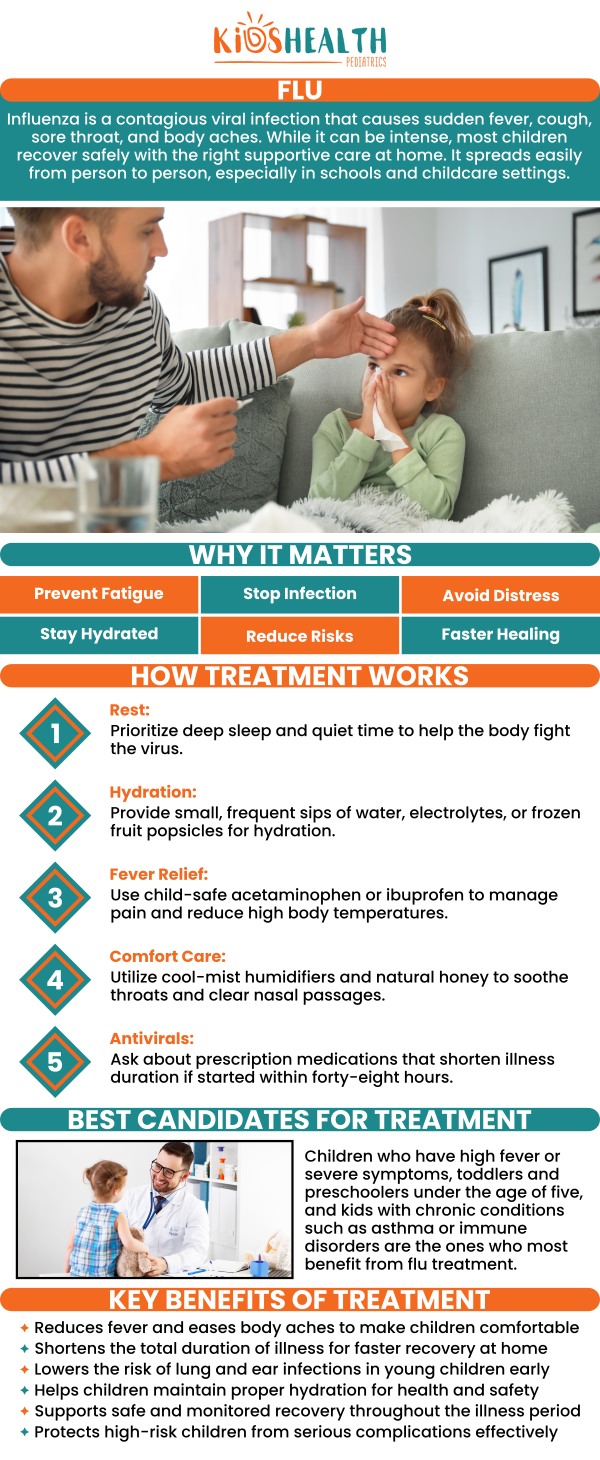
Table of Contents:
What are the symptoms of the flu in kids?
How is the flu diagnosed in children?
What is the best treatment for the flu in children?
When should I take my child to the doctor for the flu?
Why Dr. Maria Nabong’s Approach to Flu Treatment Helps Kids Recover Quickly at KidsHealth Pediatrics
Flu (influenza) is one of the most common seasonal infections. While colds and the flu can share some similarities, flu symptoms tend to come on suddenly and more intensely. Recognizing the signs helps you support your child and know when to contact us.
1. Fever and Chills
One of the hallmark features of the flu is a high fever that appears suddenly. Children may feel very warm, have chills, and seem generally unwell. Some children’s temperatures can rise quickly and stay elevated for several days.
2. Cough and Respiratory Symptoms
A persistent cough often develops with the flu. It may be dry or tickling at first and can lead to chest discomfort. Children may also have a sore throat and nasal congestion or runny nose, though these are typically milder than the cough and fever.
3. Body Aches and Headache
Children with the flu often complain of muscle aches or headaches, even if they’re too young to describe them clearly. You may notice they move more slowly, seem uncomfortable when touched, or prefer to stay still.
4. Fatigue and Weakness
Fatigue with the flu can be profound. Children may seem unusually tired, less interested in play, and more likely to nap or rest than usual.
5. Gastrointestinal Symptoms (Sometimes)
Some children also experience upset stomach, nausea, vomiting, or diarrhea during the flu, especially younger ones. While GI symptoms are more often linked to other viruses, they can occur with influenza.
6. Irritability and General Malaise
Children might be cranky, tearful, or clingy because they feel lousy without being able to express exactly what hurts.
Importantly, symptoms of the flu often develop quickly — within hours — and can be more severe than a common cold. While most children recover fully with supportive care, the flu can sometimes lead to complications, which is why we take it seriously and want families to be aware of what to look for.
At Kids Health Pediatrics, we diagnose the flu based on a combination of symptoms, clinical exam, and, when appropriate, testing.
1. Symptom Review
We begin by asking detailed questions about:
● When symptoms started
● The severity of fever
● Cough pattern
● Appetite changes
● Activity level
● Any exposure to others who are sick
This symptom timeline helps us distinguish between common viral illnesses, the flu, and other respiratory infections.
2. Physical Examination
A physical exam allows us to evaluate:
● Temperature
● Heart and lung sounds
● Throat and nasal passages
● Hydration status
We look for signs that suggest more than a routine cold — such as pronounced cough, high fever, or signs of fatigue.
3. Rapid Flu Testing (When Appropriate)
In some cases, especially during flu season or when symptoms are pronounced, we may perform a rapid test in the office that can detect influenza virus proteins from a swab of the nose or throat. The results are usually available quickly and help confirm the diagnosis.
However, testing is not always necessary if symptoms clearly match the flu and we can confidently diagnose based on clinical findings. We reserve testing for situations where knowing the result will change the care plan, such as evaluating high‑risk children or cases where early intervention may be needed.
4. Differential Diagnosis
It’s also important to rule out other illnesses that can mimic flu symptoms, such as strep throat, RSV, bronchiolitis, or pneumonia, especially in very young children or those with underlying health conditions.
By combining symptom history, physical evaluation, and testing when indicated, our team ensures an accurate diagnosis and appropriate guidance for care.
There is no single “cure” for the flu, but at Kids Health Pediatrics, we focus on supportive care that helps children feel better while their immune system fights the virus. Most children recover well at home with attentive care.
1. Rest
Encouraging plenty of rest helps the body conserve energy and focus on recovery. Children who normally run and play may want to nap or lie quietly — this is a normal and healthy part of healing.
2. Fluids
Keeping your child well‑hydrated is one of the most important parts of care:
● Encourage sips of water throughout the day
● Offer diluted fruit juices or oral rehydration solutions
● Cold treats like ice chips or popsicles may be soothing, especially if swallowing is uncomfortable
Adequate hydration helps prevent dehydration, supports the immune response, and keeps mucus thinner and easier to clear.
3. Comfort Measures for Fever and Pain
To help your child be more comfortable:
● Use cool compresses or light clothing if your child is warm
● Provide cozy blankets when they feel chilled
● Encourage gentle activities and restful play, avoiding strenuous play until fully recovered
We can also discuss safe, age‑appropriate measures to reduce fever and discomfort, and we always tailor recommendations based on your child’s age and health background.
4. Monitor and Manage Symptoms
Keep an eye on:
● Breathing patterns
● Behavior changes (e.g., extreme lethargy, confusion)
● Fluid intake
● Ability to tolerate foods and liquids
If symptoms improve steadily, that’s a good sign. If symptoms worsen or if your child becomes unable to keep fluids down, we reassess and guide you on next steps.
5. Avoiding Spread
Because the flu is contagious, keep your child at home until:
● They have been fever‑free for at least 24 hours without measures to reduce fever, and
● Symptoms are improving enough that they can comfortably return to school or group activities
This helps protect others and gives your child the chance to recover fully.
Most children with the flu can be safely cared for at home with our guidance, but there are certain situations where we recommend an in‑office visit or more urgent care.
Seek care promptly if your child:
● Has difficulty breathing, rapid breathing, or wheezing
● Is so weak or irritable that they are difficult to wake
● Shows signs of dehydration (dry mouth, few wet diapers or trips to the bathroom)
● Cannot keep fluids down
● Has a high fever that doesn’t come down with comfort measures
● Develops chest pain or severe headache
● Experiences bluish lips or skin, which may indicate low oxygen levels
● Has symptoms that rapidly worsen after a brief period of feeling better
Special Considerations
Some children are at higher risk of complications and may need closer monitoring or earlier evaluation. These include children who:
● Are very young (under 5 years old)
● Have asthma, diabetes, or immune system concerns
● Are recovering from recent illnesses or surgery
● Have heart or lung conditions
If you’re ever unsure whether your child needs to be seen, please call our office. Our team at Kids Health Pediatrics is here to help you make that decision and to arrange same‑day care if needed.
At KidsHealth Pediatrics in Glendale, AZ, Dr. Maria Nabong, MD, offers comprehensive flu care tailored to your child’s health. Dr. Nabong prescribes antiviral medications and offers practical advice on managing flu symptoms, including hydration and rest. With her expertise, children under her care experience faster recovery and fewer complications. Dr. Nabong’s compassionate approach to care helps kids feel better sooner, providing parents peace of mind throughout the process. For more information, contact us today or book an appointment online. Our clinic is located at 5750 W Thunderbird Road, F620, Glendale, AZ 85306. We serve patients from Glendale AZ, Peoria AZ, Sun City AZ, Scottsdale AZ, North Scottsdale AZ, Grayhawk AZ, and surrounding areas of Phoenix AZ.
Check Out Our 5 Star Reviews


Additional Services You May Need
Additional Services You May Need


 Send Text
 How May I Help You?
