

What Causes Seasonal Allergies in Children?
Seasonal allergies, commonly referred to as hay fever, are caused by an immune system reaction to pollen from trees, grasses, and weeds. Children may experience symptoms like sneezing, a runny nose, itchy eyes, and coughing during peak allergy seasons, typically in the spring and fall. Identifying triggers and seeking early intervention from a pediatrician like Dr. Maria Nabong at KidsHealth Pediatrics can help manage symptoms effectively and improve a child’s quality of life during allergy season. For more information, contact us or schedule an appointment online. In Glendale, AZ, we are conveniently located at 5750 W. Thunderbird Rd F620 Glendale, AZ 85306.
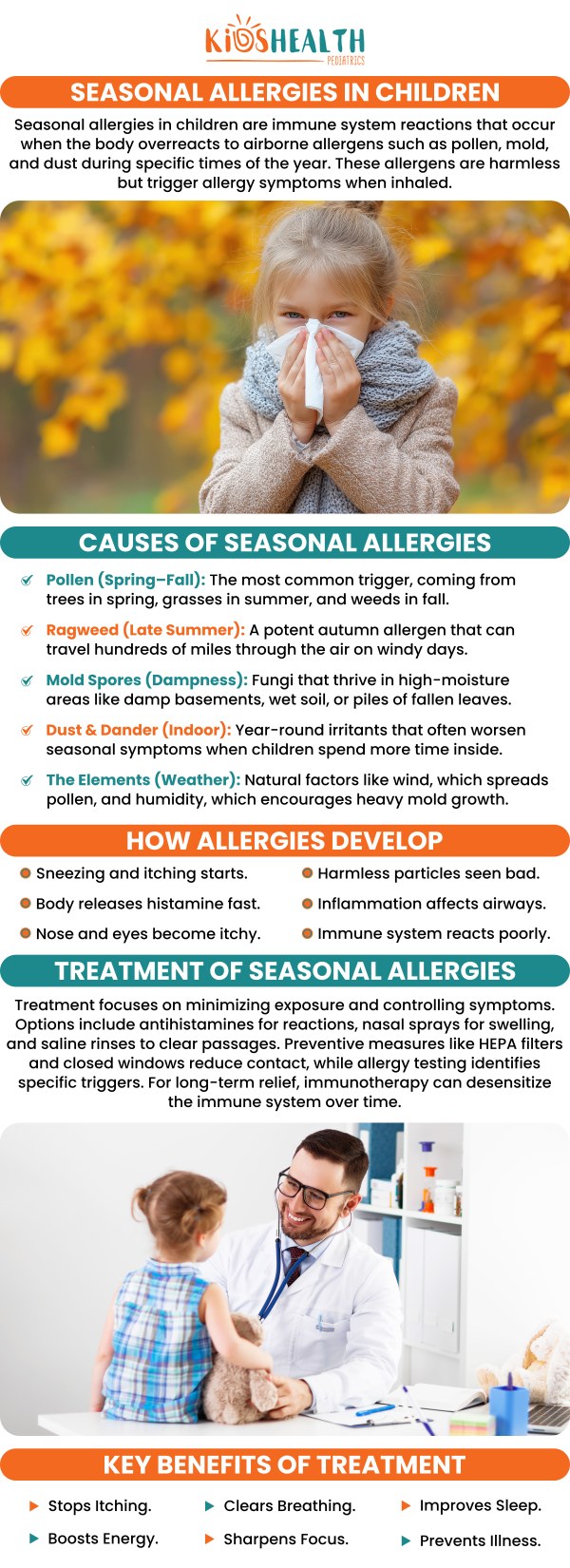
Table of Contents:
What are the most common causes of seasonal allergies in children?
How does pollen trigger seasonal allergies in kids?
Why do some children develop seasonal allergies while others do not?
Can genetics increase the risk of seasonal allergies in children?
Understanding Childhood Seasonal Allergies with Dr. Maria Nabong, MD
At KidsHealth Pediatrics, we frequently see children affected by seasonal allergies, also known as hay fever. Seasonal allergies in children are often triggered by a variety of environmental factors. The most common causes include:
● Pollen: Tree, grass, and weed pollen are the most common allergens, especially in spring and fall, causing symptoms like sneezing and itchy eyes.
● Mold Spores: Mold grows in damp areas and releases spores into the air, often triggering allergy symptoms, especially during the rainy season or in humid climates.
● Dust Mites: Although dust mites are more common indoors, they can contribute to seasonal allergies when children are exposed to them during certain times of the year.
● Pet Dander: While not strictly seasonal, exposure to pet dander can worsen during particular seasons when pets shed more fur or spend more time indoors.
● Air Pollution: High levels of pollution, particularly ozone and particulate matter, can exacerbate allergy symptoms during certain seasons, especially in urban areas.
● Changes in Weather: Shifting temperatures, humidity, and wind can increase the spread of allergens, triggering seasonal allergy flare-ups in children.
If your child is experiencing persistent sneezing, itchy or watery eyes, nasal congestion, or coughing during specific seasons, it may be due to seasonal allergies. At KidsHealth Pediatrics, we offer comprehensive allergy evaluations and personalized care plans to help your child feel their best year-round.
At KidsHealth Pediatrics, we often see children suffering from seasonal allergies, especially during the spring and fall. Pollen triggers seasonal allergies in kids by causing an immune system reaction to the tiny particles released by trees, grasses, and weeds. When children breathe in pollen, their immune system mistakenly identifies it as a harmful substance and releases chemicals like histamines to protect the body. This response leads to common allergy symptoms such as sneezing, a runny nose, itchy eyes, and congestion.
Pollen is especially prevalent during specific seasons, like spring for tree pollen and late summer to fall for grass and weed pollen, which makes allergy symptoms more intense during these times. In children with pollen allergies, even a small amount of exposure can trigger a reaction. Pollen is easily carried by the wind and can travel long distances, making it difficult to avoid. As a result, children may experience symptoms that interfere with their daily activities, including school, sports, and outdoor play.
Early identification and management of pollen allergies can help alleviate these symptoms and improve the child’s quality of life during allergy season. The severity of your child’s symptoms can depend on the amount of pollen in the air and how sensitive their immune system is. That’s why allergy symptoms often get worse during certain seasons when specific plants are pollinating. Our team at KidsHealth Pediatrics help with diagnosis, treatment, and tips for managing seasonal allergies, so your child can feel their best all year round.
At KidsHealth Pediatrics, we understand how frustrating seasonal allergies can be for both children and their families. Some children develop seasonal allergies because their immune system reacts more strongly to substances in the environment that are normally harmless, such as pollen from trees, grasses, or weeds. When these particles enter the body through the nose or eyes, the immune system may mistakenly identify them as a threat. This reaction can trigger the release of chemicals like histamine, which leads to symptoms such as sneezing, nasal congestion, itchy eyes, and a runny nose.
Genetics and environmental exposure also play an important role in whether a child develops seasonal allergies. Children with a family history of allergies, asthma, or eczema are more likely to experience allergic reactions. At the same time, factors such as local pollen levels, air quality, and early exposure to certain allergens may influence how the immune system responds as a child grows. Because every child’s immune system develops differently, some children become sensitive to seasonal allergens while others do not.
At KidsHealth Pediatrics, we know each child is unique. If you notice signs of seasonal allergies in your child, our team can help with diagnosis, treatment, and advice tailored to your family’s needs. Understanding the reasons behind your child’s allergies can help you manage symptoms and improve their quality of life.
At KidsHealth Pediatrics, we often see families concerned about the risk of seasonal allergies in their children, especially when there’s a strong family history of allergies. Genetics can indeed play a significant role in increasing the likelihood of developing seasonal allergies, also known as allergic rhinitis or hay fever. If one or both parents suffer from allergies, their children are more likely to experience similar symptoms, such as sneezing, a runny nose, and itchy eyes. This is because certain inherited genes can make a child’s immune system more likely to overreact to harmless airborne substances like pollen.
However, having a genetic predisposition doesn’t guarantee that a child will develop allergies. Environmental factors, such as early exposure to allergens, air pollution, and other triggers, also influence whether and how allergies manifest. At KidsHealth Pediatrics, we emphasize the importance of both family history and lifestyle when assessing your child’s risk and creating a personalized care plan.
If you are concerned about seasonal allergies in your child, our team is here to help with evaluation, diagnosis, and management strategies tailored to your family’s needs. Together, we can work towards keeping your child as healthy and comfortable as possible throughout allergy season.
Childhood seasonal allergies can affect a child’s daily comfort, sleep, and ability to focus at school. Dr. Maria Nabong, MD, works closely with families to help them understand why these allergies occur and how environmental triggers such as pollen, grass, and mold can cause symptoms like sneezing, nasal congestion, itchy eyes, and throat irritation. By evaluating a child’s medical history and symptoms, Dr. Maria Nabong helps parents recognize patterns related to seasonal changes and common allergens.
Through a thoughtful and patient-centered approach, Dr. Maria Nabong, MD, guides families in learning how to reduce allergen exposure and manage symptoms effectively. Education plays an important role in helping parents identify triggers and support their child’s overall well-being during allergy seasons. With careful assessment and personalized guidance, Dr. Nabong focuses on helping children stay comfortable, active, and healthy throughout the year.
For more information, contact us or schedule an appointment online. In Glendale, AZ, we are conveniently located at 5750 W. Thunderbird Rd F620 Glendale, AZ 85306. We serve patients from Glendale AZ, Peoria AZ, Sun City AZ, Scottsdale AZ, North Scottsdale AZ, Grayhawk AZ, and surrounding areas of Phoenix AZ.
Check Out Our 5 Star Reviews


Additional Services You May Need
Additional Services You May Need


 Send Text
 How May I Help You?
